Howard's Dilemma: When Enrollment Deadlines Become a Problem
Howard University’s decision to release hundreds of incoming students only weeks before classes exposed a larger failure in higher education: institutions still treat enrollment as a sequence of deadlines when students experience it as a fragile transition into a new life.
I. When a Deadline Becomes a Crisis
Howard University entered the final weeks before its fall semester with a problem familiar to every college. Hundreds of admitted students had not completed the financial steps required to secure their places. Some had unpaid balances. Others had not established payment plans or completed scholarship and financial aid reporting. Howard said it had communicated the requirements repeatedly from March through July and needed confirmed enrollment to plan courses, housing, aid, and student support.
On July 23, the University notified 502 incoming students that it could no longer hold their places.
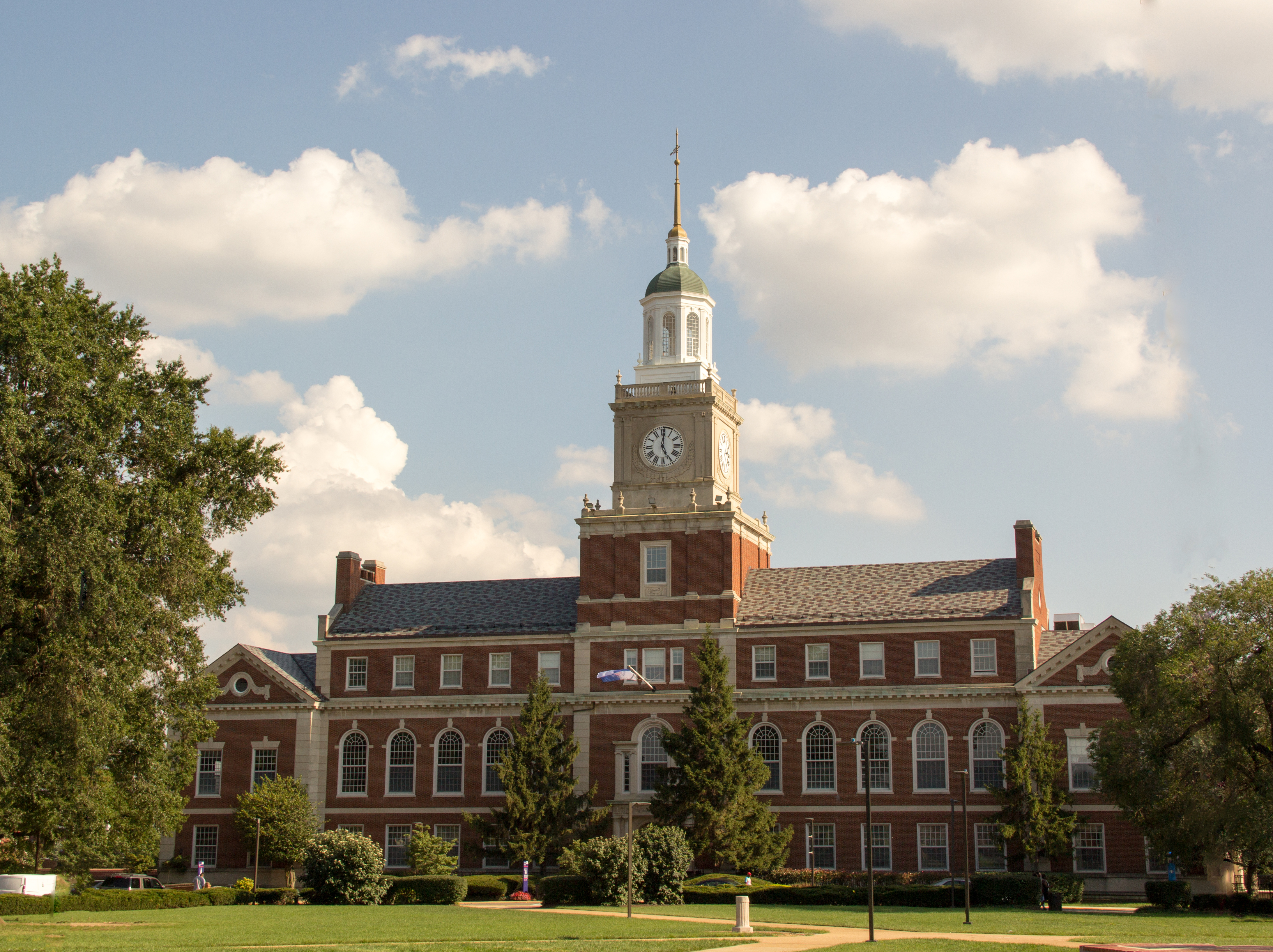
Founders Library at Howard University in Washington, D.C., dedicated in 1939 and designed by architect Albert I. Cassell. Photograph by Derek E. Morton, August 16, 2017. Source: Wikimedia Commons. Licensed under Creative Commons Attribution ShareAlike 4.0 International, CC BY SA 4.0.
The institutional explanation followed a recognizable logic. A college cannot reserve beds, course seats, financial aid, and advising capacity indefinitely. Enrollment deposits do not settle tuition balances. Anticipated scholarships do not always arrive. A student who remains financially unresolved in July may never appear in August. Administrators need a point at which an admitted student becomes a confirmed student or an available seat returns to the institution.
Students experienced the same decision very differently.
Some had spent months imagining themselves at Howard. They had declined other offers, paid deposits, planned transportation, bought supplies, arranged housing, and told their families that they were going to college. Several said they had scholarships or aid in process. Others reported difficulty reaching offices or understanding what remained incomplete. A deadline that appeared routine inside an enrollment system became, from the student’s perspective, the sudden collapse of an academic future.
The timing intensified the damage. Howard’s fall semester was scheduled to begin August 17. Students received unenrollment notices only weeks before classes and, in some cases, shortly before planned travel or move in. By late July, many colleges had closed their applications, committed their aid, filled residence halls, and completed orientation planning. A student released in March still has choices. A student released at the end of July may have only days to rebuild an entire college plan.
Howard began reviewing individual cases and later reported that more than 200 students had been readmitted. The reinstatements showed that the original group was not uniform. Some students had unresolved balances. Some apparently had documentation that required additional review. Some may have misunderstood deadlines. Others may have believed pending scholarship funds would satisfy the requirement.
A process that ultimately restored hundreds of students also raises a difficult question. Could earlier, more individualized intervention have prevented the crisis?
Colleges often describe enrollment as a funnel. Students move from inquiry to application, admission, deposit, registration, and attendance. The model works well for measuring conversion, but it can obscure the human reality inside each stage. Students do not simply advance from one status code to another. They assemble financing from federal aid, family contributions, institutional grants, external scholarships, payment plans, and sometimes uncertain personal circumstances. A missing document may reflect neglect, but it may also reflect confusion, delayed funding, an inaccessible portal, or an unanswered question.
Administrative systems rarely make those distinctions gracefully. A database can identify a balance. It cannot always explain why the balance remains. A communication platform can record that an email was sent. It cannot establish that a student understood the message, recognized its urgency, or knew which office could resolve the problem. A deadline can create operational clarity for the institution while leaving the student in uncertainty.
Howard was entitled to establish financial requirements and deadlines. No college can operate without them. The deeper failure came from allowing so many students to reach the final weeks before the semester without a shared understanding of their status.
An effective enrollment process should escalate intervention as the consequences become more serious. Routine reminders may be sufficient in March. Students still unresolved in June need clearer warnings, direct outreach, and coordinated assistance. By July, a student at risk of losing admission should receive communication that leaves no ambiguity about the amount due, the documentation missing, the deadline, the consequence, and the person authorized to help.
Financial aid, admissions, student accounts, housing, and orientation often operate as separate administrative units. Students experience them as one institution. A scholarship reported to one office may not appear in another system. A financial aid question may affect housing. A missing transcript may prevent registration even when the student believes every financial requirement has been met. Fragmented administration transfers the burden of coordination to the person least equipped to carry it.
Howard’s crisis therefore belongs to a broader pattern in higher education. Colleges have invested heavily in recruitment technology, customer relationship management platforms, personalized marketing, and predictive analytics. Many still struggle with the last mile between deposit and attendance. Institutions know how to attract students, but their systems do not always recognize when an admitted student is quietly approaching an administrative cliff.
Enrollment management cannot end when the deposit arrives. The most consequential work may occur afterward.
II. The Admissions Safety Net
The response from other colleges revealed a second side of the story. Students who had lost their places at Howard suddenly became prospective students again, and institutions with available capacity moved quickly.
The University of the District of Columbia extended its undergraduate application deadline to August 7. New York announced expedited late admission reviews through participating SUNY and CUNY campuses for affected residents. Maryland directed the Maryland Higher Education Commission and the University System of Maryland to help students identify programs, navigate aid, and receive accelerated consideration at institutions with space. Maryland also offered an $800 credit intended to offset deposits students had paid to Howard.
Other historically Black colleges and universities also explored ways to assist displaced students. Their involvement mattered because some affected students had chosen Howard not merely as one college among many, but as an institution connected to identity, history, community, and aspiration. A technically available seat at another institution does not automatically replace the experience a student believed Howard would provide.
The emergency response was generous, but it also exposed an unusual feature of the current enrollment environment. Many institutions still had room.
Higher education has entered a period of intensifying competition for students. Demographic decline, regional population shifts, affordability concerns, public skepticism, and changing patterns of college attendance have left many institutions searching for enrollment. A student displaced from one university may arrive as an opportunity for another.
Such conditions made the rapid offers possible. Public systems could identify campuses with available space. Colleges could reopen or extend applications. State officials could provide a modest financial bridge. Admissions offices that normally take months could review students in days because the urgency was clear and the applicants had already completed much of the work required for college admission.
The resulting safety net deserves praise. It also deserves scrutiny.
Expedited admission does not guarantee equivalent academic programs, housing, aid, or institutional fit. A student admitted late may enter after orientation, course selection, and residence assignments have already occurred. Scholarships offered by Howard may not transfer. Nursing, engineering, business, and other capacity constrained programs may have no room even when the university itself remains open. A student may secure admission somewhere and still lose the course of study originally planned.
Geography creates another barrier. SUNY and CUNY could help New York residents. Maryland’s public system could assist students able to attend its institutions. UDC offered an immediate local option. Students from other states may not qualify for the same tuition, aid, or political support. A national crisis affecting 502 students produced a patchwork response determined partly by where each student happened to live.
The $800 credits offered by New York and Maryland recognized another important fact. Enrollment displacement imposes real costs. Students may lose deposits, application fees, travel expenses, housing payments, and purchases made for an institution they can no longer attend. Families may need to change transportation plans or accept less favorable financing. The direct loss may appear modest within a university budget, but it can become decisive for a family already struggling to close a tuition gap.
A more durable safety net should not depend on governors improvising after a crisis reaches the news.
States, college systems, and national associations could establish standing protocols for students displaced by closures, accreditation losses, institutional errors, financial emergencies, or mass disenrollment. Participating colleges could report available capacity by program. Students could authorize rapid transfer of admissions records and financial aid documents. Institutions could waive application fees, preserve as much aid as possible, and provide accelerated advising before a student accepts a substitute offer.
Higher education already uses teach out agreements when institutions close. A related model could support students whose enrollment collapses before matriculation. The circumstances differ, but the principle remains similar. Students who relied in good faith on an institution should not bear the full cost when that relationship breaks at the last moment.
Colleges should also learn from the institutions that responded quickly. Emergency admission demonstrated that ordinary processes contain more flexibility than they often acknowledge. Deadlines can move. Records can be reviewed rapidly. Offices can coordinate. Leaders can identify available seats and direct resources toward students in immediate need.
Such flexibility should not eliminate standards. A late applicant still must qualify academically. A college cannot admit students into full programs or promise aid it does not possess. Yet the response showed that institutional rules can serve students when leaders treat time as a problem to solve rather than a reason to stop.
The Howard episode should not become a simple morality tale with one villain and hundreds of blameless students. Universities need payment certainty. Students have responsibilities. Deadlines matter. Financial commitments must become real before a semester begins.
Responsibility, however, is not the same as symmetry. Howard possessed the systems, staff, information, and authority. Incoming students depended on the institution to explain a complicated process clearly and identify unresolved problems before the consequences became irreversible. Colleges carry the greater duty because they design the process.
The episode also challenges a common assumption in enrollment management. Institutions often focus on the risk that a student will choose another college. Howard’s crisis revealed the opposite risk. A student may remain committed to an institution even as administrative barriers quietly make attendance impossible.
Data should help colleges identify that danger. An effective pre matriculation dashboard would combine financial aid completion, outstanding balances, scholarship documentation, housing status, orientation participation, transcript receipt, registration, and student contact history. Risk flags should trigger coordinated outreach rather than another automated message from a separate office.
Technology alone will not solve the problem. A dashboard can identify students with unresolved requirements, but someone must contact them. Staff must have authority to explain the full situation, distinguish documentation delays from genuine inability to pay, and connect the student to a workable resolution. Good data should organize human attention, not replace it.
The colleges that opened their doors performed an important public service. They also offered a reminder of higher education’s institutional purpose. Students do not exist to complete enrollment workflows. Enrollment workflows exist to help students reach the classroom.
Howard’s decision may have been administratively defensible. The scale, timing, and confusion made it educationally damaging. Reinstating more than 200 students repaired part of the harm. The emergency pathways created by UDC, SUNY, CUNY, Maryland, and other institutions gave additional students a chance to preserve the fall semester.
A better system would intervene before an accepted student becomes a displaced student.
Enrollment management is not only the work of filling a class. It is also the work of preventing students from disappearing between an offer of admission and the first day of class.
Further Reading
- Howard University, First Time in College Enrollment Updates
- Associated Press, Some Schools Are Extending Admissions for Students Unenrolled by Howard University
- Associated Press, More Than 200 Students Readmitted After Howard Mass Unenrollment
- Maryland Offers Expedited Admission and Aid to Affected Howard Students