Why Benjamin Franklin Should Be the Next Face on Mount Rushmore
Political independence gave the United States its freedom, but 250 years of technological innovation transformed that freedom into a durable republic whose inventions have improved the lives of billions and continue to shape humanity's future.
American independence did not end on July 4, 1776. The Declaration created a political claim, but the young republic still had to prove that it could survive, govern, defend itself, feed its people, and compete with older powers. Liberty required institutions, resources, knowledge, and practical tools.
Technology became one of the great engines of that survival. The United States did not merely inherit independence. It built independence across farms, workshops, factories, laboratories, universities, railroads, power grids, computer networks, and launchpads. Over 250 years, American technology helped transform a fragile republic into a nation capable of shaping the modern world.

Joseph-Siffred Duplessis, Benjamin Franklin, circa 1785. Portrait of the American polymath (statesman, inventor, diplomat, and scientist) painted during the final years of his life. Oil on canvas, National Portrait Gallery, Smithsonian Institution, Washington, D.C. Digital image courtesy of Google Arts & Culture via Wikimedia Commons. Public domain.
The first generations of Americans understood independence in concrete terms. A nation that depended entirely on foreign tools, ships, weapons, machines, and scientific knowledge could not remain fully independent for long. Political sovereignty required productive capacity.
Early mills converted water power into flour, lumber, and textiles. Surveying instruments helped map land, roads, canals, and settlements. Interchangeable parts promised reliable manufacturing at scale. Agricultural tools allowed farmers to produce more food with less labor. Every improvement strengthened the country's ability to provide for itself.
American technology began as necessity. The early republic needed roads, canals, arms, ships, mills, presses, and farms. Innovation answered those needs.
The Continent Becomes Connected
The nineteenth century changed the scale of American life. Railroads connected regions that had once felt distant from one another. The telegraph collapsed time, allowing information to move faster than people, horses, or trains. Steam power transformed transportation, manufacturing, and commerce.
A continental nation became possible because technology made it governable, profitable, and imaginable. Railroads carried people, goods, newspapers, mail, and ideas. Telegraph wires allowed markets, governments, and families to communicate across great distances. Mechanized agriculture fed growing cities and supported westward expansion.
The United States became more than a collection of states along the Atlantic. Technology helped create a national economy.

John T. Daniels, First Flight of the Wright Flyer, Kitty Hawk, North Carolina, 17 December 1903. Orville Wright pilots the aircraft as Wilbur Wright runs alongside moments after release, marking the first sustained, controlled, powered flight of a heavier than air machine. Courtesy of the Library of Congress, Prints and Photographs Division, digital ID cph.3a53266. Public domain.
Electricity and the Modern Nation
Electricity marked another great turn. Factories no longer depended on rivers for power. Streets remained lit after sunset. Homes gained lighting, refrigeration, radio, telephones, and eventually television. Cities became safer, more productive, and more connected.
Electricity also changed expectations. Americans increasingly assumed that progress should enter ordinary life. Technology was no longer confined to industry, war, or transportation. It entered kitchens, schools, hospitals, offices, and living rooms.
The telephone connected households and businesses. Electric motors powered factories. Radio created a national audience. Motion pictures and broadcast media shaped a shared culture. American technology began not only to produce goods, but to create a common national experience.
The twentieth century revealed the strategic power of research. American laboratories, universities, companies, and government agencies produced breakthroughs that changed history. Radar helped defend democracy during World War II. Antibiotics saved lives. Jet engines transformed aviation. Nuclear energy revealed both extraordinary promise and grave danger. Semiconductors made modern computing possible.
The United States increasingly treated science as a national asset. Federal research, university laboratories, private industry, and military needs formed a powerful innovation system. Knowledge moved from theory to application, from laboratory to factory, from research paper to public life.
Less than two centuries after declaring independence, Americans walked on the Moon. The Apollo program became one of history's clearest demonstrations that a free society could organize science, engineering, industry, and imagination around a common goal.

NASA, Apollo 11 Saturn V Launch, Launch Pad Camera 4, Kennedy Space Center, Florida, 1969. Animated sequence from original Apollo 11 launch footage. Source: NASA archival film, available via Wikimedia Commons (derived from NASA public domain materials). Public domain.
The Digital Revolution
Computing changed the meaning of technology again. Mainframes supported government, science, and business. Personal computers placed computational power on desks. The Internet connected universities, companies, governments, and eventually billions of people. Smartphones placed communication, navigation, photography, commerce, publishing, and computation into a single device carried in the pocket.
American technology did not merely make machines faster. It reorganized daily life. Search engines changed access to knowledge. Social platforms changed public conversation. Cloud computing changed business. GPS changed transportation. Digital payments changed commerce. Streaming changed entertainment. Online education changed learning.
The digital revolution created a new form of independence, access to information at extraordinary scale.

Arnold Reinhold, First Public Showing of the Apple iPhone, Macworld Conference & Expo, San Francisco, California, 9 January 2007. Photograph of the original iPhone displayed under glass during its public debut following Steve Jobs's keynote presentation. Source: Wikimedia Commons. Licensed under Creative Commons Attribution-ShareAlike 4.0 International (CC BY-SA 4.0).
Technologies That Made the World Better
Americans should particularly celebrate the technologies pioneered or advanced in the United States that made the world a better place. The story is not simply national success. It is global benefit.
American innovation helped feed more people through agricultural mechanization, hybrid seeds, logistics, refrigeration, and modern supply chains. It helped save lives through vaccines, antibiotics, medical imaging, cardiac devices, pharmaceuticals, and public health tools. It connected families and businesses through the telegraph, telephone, radio, television, Internet, email, smartphones, and video calls.
American engineers and scientists helped create aviation, modern computing, GPS, weather forecasting, satellite communications, space exploration, and the semiconductor industry. American universities and companies helped advance genomics, biotechnology, artificial intelligence, renewable energy, and advanced materials.
Not every invention emerged from America alone, and no country innovates in isolation. Progress has always depended on global exchange. Yet the United States has repeatedly turned discovery into useful systems at scale. That capacity deserves celebration.
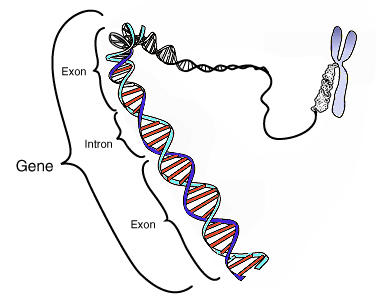
National Human Genome Research Institute (NHGRI), National Institutes of Health, Gene Structure Diagram. Originally published by Genome.gov as part of the Talking Glossary of Genetics. Reproduced via Wikimedia Commons. Public domain under U.S. federal government copyright policy.
Artificial Intelligence and the Next Chapter
Artificial intelligence may become the next great general purpose technology. Steam amplified physical labor. Electricity powered modern life. Computing organized information. AI may extend reasoning, discovery, design, writing, coding, research, medicine, education, and administration.
The promise is not that machines replace human purpose. The promise is that intelligent tools can help people solve problems that remain too complex, too slow, or too expensive for current methods. AI may accelerate drug discovery, improve tutoring, support scientific research, strengthen public administration, assist disabled people, and help small teams accomplish work that once required large organizations.
The risks are real. Bias, hallucination, surveillance, job disruption, misinformation, and concentration of power all demand serious governance. American technological leadership has always required more than invention. It has required judgment.
The next era will not belong to one technology alone. Space, quantum science, climate technology, and artificial intelligence may develop together.
Space technologies could extend permanent human activity beyond Earth. Satellites already support communication, navigation, weather forecasting, disaster response, agriculture, finance, and national security. Reusable rockets have lowered launch costs and opened new possibilities. A sustained human presence in orbit, on the Moon, and eventually beyond could create new industries and new scientific frontiers.
Quantum computing may solve problems beyond the reach of today's machines. Chemistry, materials science, cryptography, logistics, and physics could change if quantum systems mature. The field remains difficult and uncertain, but its potential is too large to ignore.

Onri Jay Benally (OJB Quantum), IBM Quantum System One, ThinkLab, IBM Thomas J. Watson Research Center, Yorktown Heights, New York, 22 May 2024. Photograph of IBM's Quantum System One, a superconducting quantum computer housed within its signature borosilicate glass enclosure. Source: Wikimedia Commons. Copyright © Onri Jay Benally. Licensed under the Creative Commons Attribution 4.0 International License (CC BY 4.0).
Climate technology may define the moral and practical challenge of the next century. Advanced nuclear energy, fusion research, carbon capture, grid modernization, battery storage, resilient agriculture, clean industrial processes, and new materials could determine whether modern civilization can sustain prosperity without exhausting the planet that supports it.
AI may become the accelerant across all three frontiers. It could design better materials, control complex energy systems, optimize spacecraft, simulate molecular behavior, improve climate models, and help scientists search the vast space of possible discoveries.

Orren Jack Turner, Albert Einstein, 1947. Portrait of the theoretical physicist whose work transformed modern physics through the theories of special and general relativity. Source: Library of Congress, Prints and Photographs Division, digital ID cph.3b46036. Restored digital reproduction via Wikimedia Commons. Original photograph published in 1947; copyright was not renewed. Public domain in the United States.
Independence as Capacity
The deeper lesson of 250 years is that independence means more than freedom from foreign rule. Independence also means capacity. A nation must be able to produce, repair, discover, adapt, defend, educate, and imagine.
Technology has repeatedly expanded that capacity. It allowed Americans to farm more land, cross more distance, communicate more quickly, manufacture at scale, defeat tyrannies, cure disease, explore space, connect the world, and now build tools that can reason with us.
A country that cannot innovate becomes dependent on those that can. A country that can innovate responsibly gives itself choices. On Independence Day, Americans rightly celebrate liberty, constitutional government, civic tradition, and the sacrifices that preserved the republic. They should also celebrate the technologies that turned independence into practical reality.
The water mill, the railroad, the telegraph, the electric grid, the telephone, the airplane, the semiconductor, the computer, the Internet, GPS, spaceflight, biotechnology, and artificial intelligence all belong to the larger American story. Each one expanded what people could do. Each one changed the relationship between distance, labor, knowledge, and opportunity.
The best American technologies did not merely enrich the United States. They improved life across the world. They helped people live longer, travel farther, communicate faster, learn more, produce more food, understand the planet, and imagine a future beyond old limits.
The United States began as an argument about liberty. It endured because generations of Americans built the tools, systems, and institutions needed to sustain that liberty. The nation did not always use technology wisely, and progress often brought costs alongside benefits. Yet the broad pattern remains remarkable.
Political independence created the opportunity for self government. Technological innovation gave that opportunity practical strength.
As America marks 250 years, the most fitting celebration is not nostalgia alone. Gratitude matters, but so does responsibility. The next generation will inherit AI, space industry, quantum science, climate technology, and tools not yet imagined. Their task will resemble the task of earlier Americans: use invention to expand human freedom, improve human welfare, and leave the country, and the world, more capable than they found it.

Rubin Observatory/NOIRLab/NSF/AURA/F. Bruno, Vera C. Rubin Observatory, Cerro Pachón, Chile, 2023. The Vera C. Rubin Observatory and Rubin Auxiliary Telescope, built through an international partnership led by the U.S. National Science Foundation and the U.S. Department of Energy, will conduct the Legacy Survey of Space and Time (LSST), creating one of the most comprehensive maps of the universe ever assembled. Source: NSF's NOIRLab via Wikimedia Commons. Licensed under the Creative Commons Attribution 4.0 International License (CC BY 4.0).
Further Reading
- US National Academies of Sciences, Engineering, and Medicine
- US National Science Foundation
- Thomas P. Hughes,American Genesis: A Century of Invention and Technological Enthusiasm, 1870–1970. University of Chicago Press, 2nd ed., 2004.
- Scientific American
- NYTimes on Mt. Rushmore